How to Velvet Chicken for Perfectly Tender Stir-Fry
Master the essential Chinese culinary secret to achieving incredibly silky and tender meat in your stir-fries. This simple velveting technique protects the chicken from high heat, ensuring it stays juicy and restaurant-quality every time.
Servings4 Portions
Prep Time15 Mins
Cook Time5 Mins
Difficulty
Easy
Ingredients
4
- boneless skinless chicken breast14 oz
- boiling water2.5 tbsp
- soy sauce2 tsp
- cornstarch2 tsp
- Vegetable oil2 tsp
Step-by-Step Instructions
01
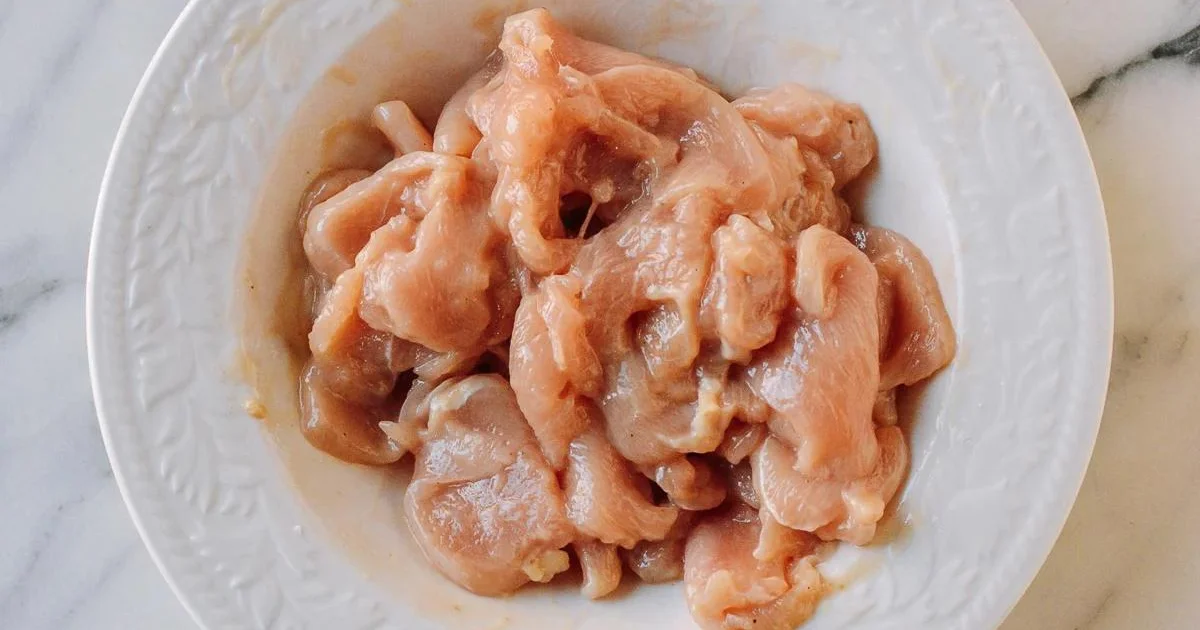
Prepare the chicken by slicing it into 1.5 to 2-inch pieces, approximately 1/4 inch thick. For the most tender results, ensure you are slicing across the grain, which is particularly important when using chicken breast.
02
Place the sliced chicken in a medium mixing bowl. Add the water and soy sauce (or oyster sauce for a deeper flavor) and toss thoroughly until the meat is well-coated. Let it rest for 5 to 10 minutes; you will notice the chicken absorbs most of the liquid during this time.
03
Add the cornstarch and vegetable oil to the bowl. Mix again until the cornstarch is fully incorporated and creates a smooth, uniform coating around each piece of chicken. For optimal texture, allow the chicken to marinate for another 15 to 20 minutes.
04
To cook using the searing method: Heat a wok over high heat until it begins to smoke lightly. Add a few tablespoons of vegetable oil to coat the surface, then arrange the chicken in a single layer. Let it sear undisturbed for 20 seconds, then stir-fry just until the exterior turns opaque. Remove immediately from the wok.
05
To cook using the water-blanching method: Bring a wok or pot of water to a rolling boil. Carefully add the marinated chicken. Once the meat turns opaque, cook for just 10 more seconds. The chicken should be about 80% cooked through. Drain and remove from the heat.