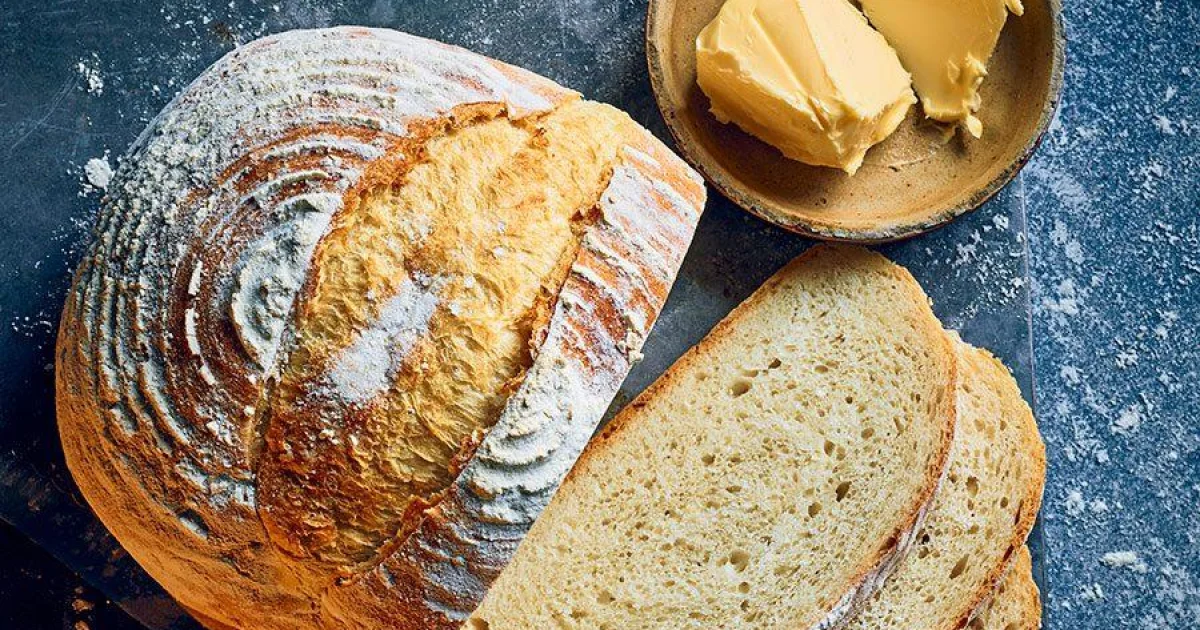
Easy Homemade Crusty Artisan Bread
Master the art of baking at home with this simple, no-fuss crusty bread recipe. With a pillowy interior and a golden, crackly crust, this loaf rivals any professional bakery.
Servings8 Portions
Prep Time30 Mins
Cook Time30 Mins
Difficulty
Intermediate
Ingredients
8
- strong white bread flour500 g
- boiling water325 ml
- fine sea salt10 g
- fast-action dried yeast4 g
Step-by-Step Instructions
01
In a large mixing bowl, combine the strong white bread flour and fast-action yeast. Pour in 325g of room-temperature water (weighing is more accurate than measuring by volume). Use your hands or a sturdy spatula to mix until a shaggy dough forms, making sure to incorporate all the dry flour from the sides of the bowl. Cover with a damp tea towel and let it rest for 30 minutes.
02
Sprinkle the salt over the rested dough. Work it in by stretching the dough over the salt several times. Transfer the dough to a lightly floured surface and knead for about 5 minutes. Use the heel of your hand to stretch the dough away from you, fold it back, rotate 90 degrees, and repeat until the dough is shiny and elastic. Shape into a tight ball, place in a bowl, cover, and let rise at room temperature for 1 hour, or in the fridge overnight for a deeper flavor.
03
Once the dough has doubled in size and feels pillowy, tip it onto a work surface and knead briefly to knock out the large air bubbles. Let it rest for 5 minutes. Shape the dough into a tight, smooth round. Place it domed-side down into a proving basket or a bowl lined with a well-floured tea towel. Leave to prove in a warm place for 40–60 minutes (or 2–3 hours in the fridge) until doubled in size.
04
Place a heavy lidded casserole dish (Dutch oven) in the oven and preheat to 230°C (210°C fan/gas 8). Carefully remove the hot pot. Flip the dough onto a piece of baking parchment and slash the top with a sharp knife. Use the parchment to lower the dough into the pot. Cover with the lid and bake for 25 minutes. Remove the lid and bake for another 5–10 minutes until the crust is deeply golden and the loaf sounds hollow when tapped on the bottom. Cool on a wire rack for at least 40 minutes before slicing.