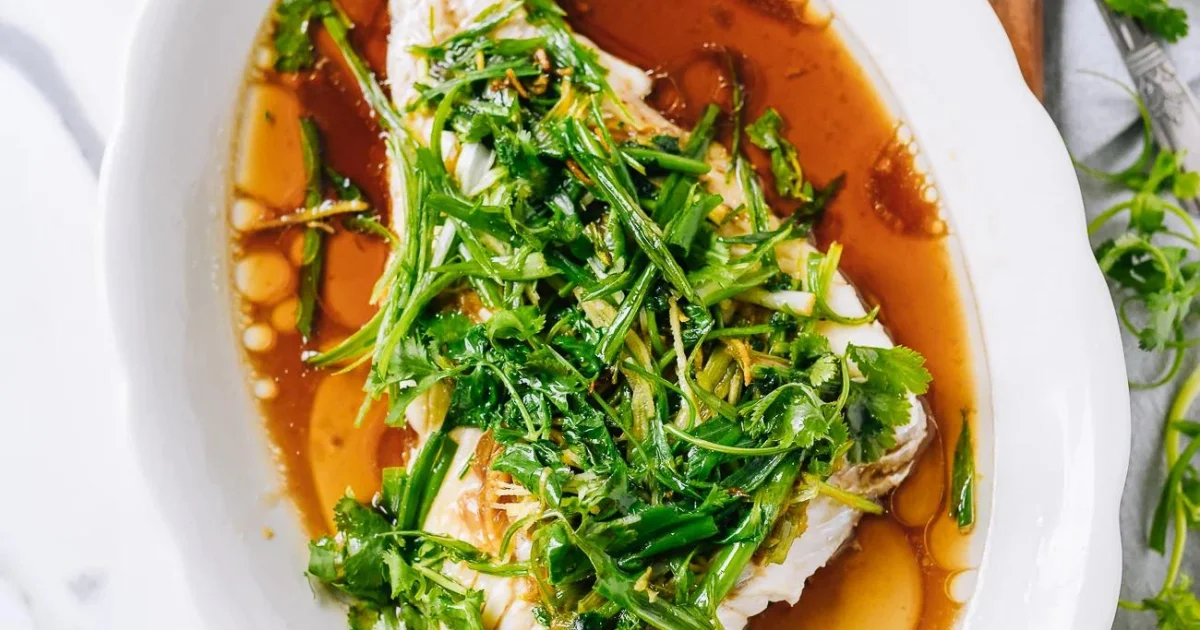
Cantonese Steamed Fish with Ginger and Scallions
This Cantonese steamed fish is light, aromatic, and ready in minutes. Tender white fish is finished with sizzling ginger-scallion soy sauce for a clean, restaurant-style dish at home.
Servings2 Portions
Prep Time5 Mins
Cook Time15 Mins
Difficulty
Intermediate
Ingredients
2
- delicate white fish fillet10 oz
- scallions2
- fresh ginger15 g
- cilantro1 bunch
- light soy sauce0.5 tbsp
- hot water2 tbsp
- Vegetable oil2 tbsp
- salt0.1 tsp
- sugar0.1 tsp
Step-by-Step Instructions
01
Prepare the aromatics: cut the scallions into 2-inch pieces, halve them lengthwise, then slice into thin matchsticks. Thinly slice the ginger and cut it into fine strips. Roughly chop the cilantro and set everything aside.
02
In a small bowl, stir together the light soy sauce, salt, sugar, and hot water until the sugar and salt dissolve. Set the sauce mixture near the stove.
03
Set up a steamer or wok with a rack and add 1 to 2 inches of water. Bring the water to a steady boil.
04
Rinse the fish fillet and pat it dry. Place it on a heatproof oblong plate that fits inside your steamer, then carefully transfer the plate to the steaming rack.
05
Reduce the heat to medium so the water keeps steaming without boiling away too quickly. Cover and steam for 7 to 10 minutes, depending on thickness. Very thin fillets may need only 4 to 5 minutes.
06
Check doneness by inserting a butter knife into the thickest part of the fish; it should slide through easily and the fish should flake gently. Turn off the heat and carefully pour off any liquid collected on the plate.