Feta & Walnut-Crusted Lamb with Pomegranate
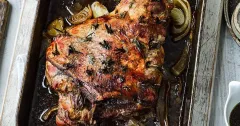
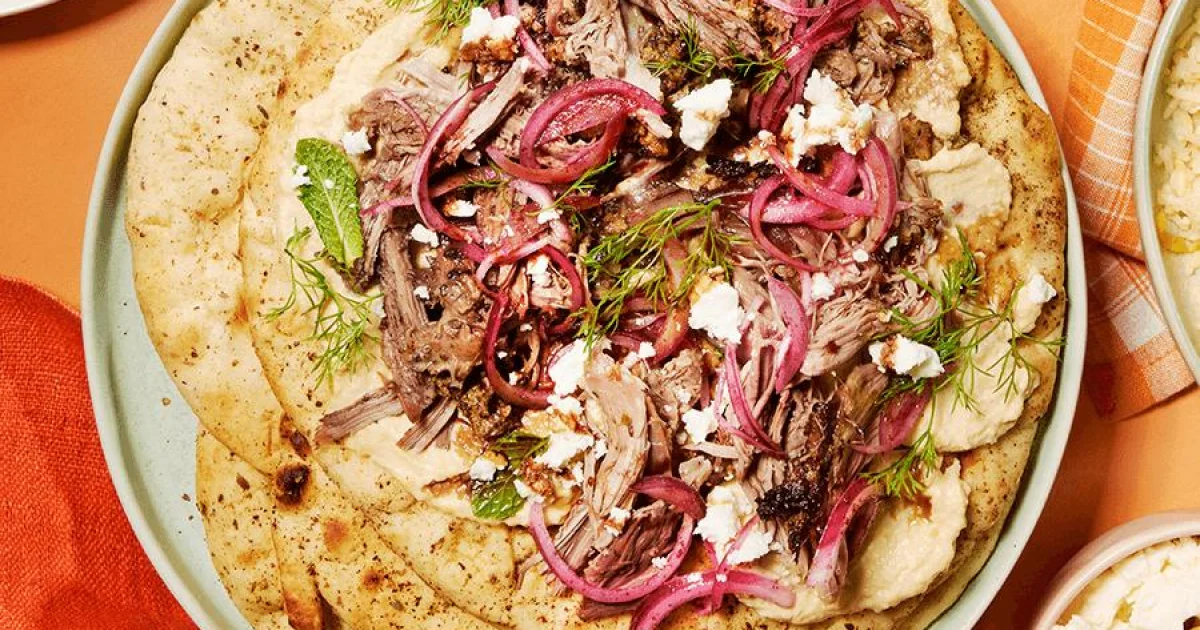
This slow-roasted lamb shoulder is coated in a savory feta, walnut, herb, and pomegranate molasses crust, then cooked until tender enough to shred. Serve it in warm flatbreads with sumac onions, hummus or yogurt, and fresh herbs for a festive Easter centerpiece with bold Middle Eastern-inspired flavor.
Servings6 Portions
Prep Time20 Mins
Cook Time210 Mins
Difficulty
Intermediate
Ingredients
6
- shoulder of lamb2000 g
- large onion, thickly sliced1
- red onion1
- garlic cloves, minced2 cloves
- feta cheese100 g
- walnuts100 g
- parsley, roughly chopped1 small bunch
- white wine or stock150 ml
- pomegranate molasses4 tbsp
- ground cumin2 tsp
- ground cinnamon2 tsp
- olive oil3 tbsp
- lime juice1 tbsp
- sumac2 tsp
- salt and black pepper1 to taste
- warm flatbreads6
- hummus or yogurt200 g
- soft herbs, such as mint and parsley1 handful
Step-by-Step Instructions
01
Preheat the oven to 160°C/140°C fan/gas 3. In a food processor, blend the feta, walnuts, parsley, pomegranate molasses, cumin, cinnamon, garlic, olive oil, salt, and black pepper until you have a thick, coarse paste.
02
Spread the thickly sliced onion over the base of a deep roasting tin. Set the lamb shoulder on top and pierce the meat all over with the tip of a sharp knife so the seasoning can work into the lamb.
03
Spread the feta-walnut paste over the top and sides of the lamb. Pour the white wine or stock into the tin around the meat, taking care not to wash off the crust.
04
Cover the lamb first with baking parchment, then with foil. Seal the foil tightly around the edges of the tin and roast for 3 hours, or until the meat is very tender and pulling away from the bone.
05