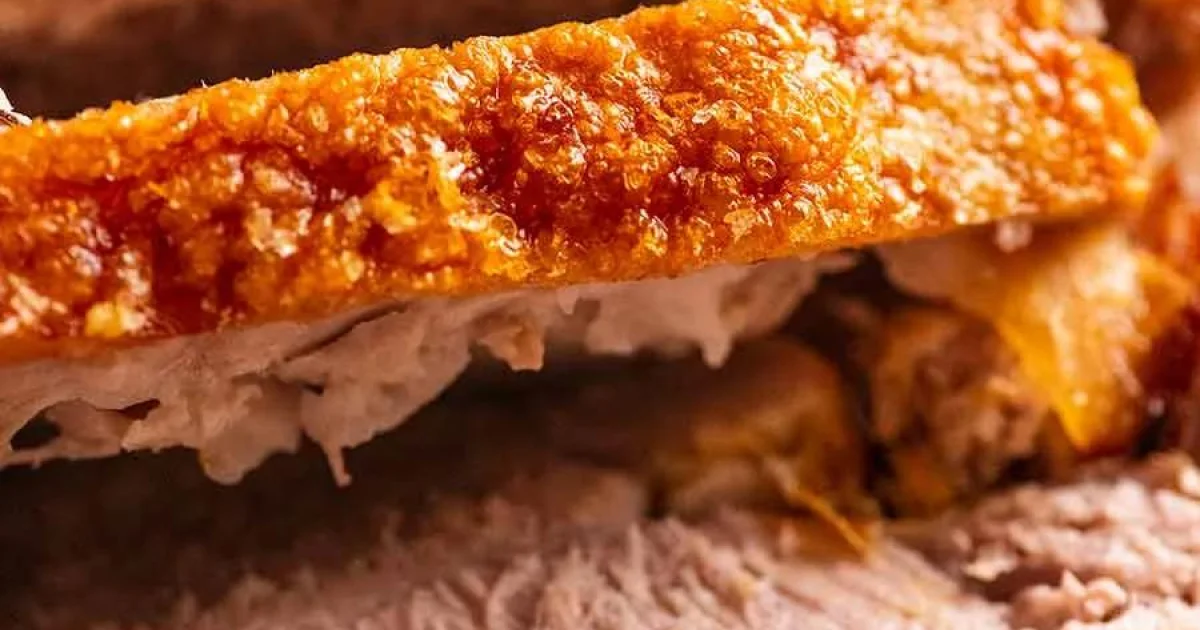
This slow-roasted pork shoulder delivers tender, juicy meat under a shatteringly crisp layer of golden crackling. A simple onion, garlic, wine, and pan-dripping gravy makes it a generous centerpiece for Sunday dinner, holidays, or any comfort-food feast.
Dry the pork skin very thoroughly with paper towels. For the best crackling, place the pork uncovered in the refrigerator overnight; if time is short, even 1 hour helps.
Preheat the oven to 220°C/430°F, or 200°C/400°F for a fan oven.
Place the pork flesh-side up. Rub the meat with 1 tbsp olive oil, 1 1/2 tsp salt, the black pepper, and the fennel seeds, working the seasoning into any folds and crevices.
Turn the pork skin-side up. Rub the skin with the remaining 1 tsp olive oil, then sprinkle evenly with the remaining 1 1/2 tsp salt. Make sure the salt covers the whole surface so the crackling bubbles evenly.
Arrange the halved garlic bulb and onions in a roasting pan to create a bed for the pork. Set the pork on top, skin-side up.
Pour the white wine or cider into the pan, taking care not to splash the pork skin. Transfer the pan to the oven.
Immediately reduce the oven temperature to 160°C/320°F, or 140°C/285°F for a fan oven.
Roast the pork slowly for 2 1/2 hours, allowing the meat to become tender while the skin dries further.
After 1 1/2 hours, check whether the pork has warped and made the skin uneven. If needed, prop the meat with balls of foil so the skin sits as level as possible, then return it to the oven for the remaining hour.
Check the roasting pan during cooking. If it looks dry, add a splash of water. If any areas of the skin have lost their salt, lightly brush or spray those spots with oil and sprinkle with a little more salt.
Increase the oven to 250°C/485°F, or to the highest setting your oven allows.
Roast for about 30 minutes more, rotating the pan as needed, until the crackling is crisp, puffed, and golden all over. Cover any finished areas with small pieces of foil if other sections still need more time.
Transfer the pork to a platter. Tent loosely with foil and rest for 20 minutes before carving. Use a serrated knife to cut cleanly through the crackling.
To make the gravy, skim 3 tbsp fat from the roasting pan and place it in a saucepan over medium heat.
Strain the remaining pan juices, pressing the roasted onion and garlic to extract their flavor. Discard the solids and skim off excess fat from the strained juices.
Add the flour to the saucepan with the pork fat and cook, whisking, for 1 minute to form a roux.
Gradually whisk in the chicken stock until smooth, then whisk in the strained pan juices.
Simmer for about 3 minutes, whisking often, until the gravy thickens to a pourable consistency.
Season the gravy with salt and pepper to taste. Serve the pork with gravy on the side, keeping it away from the crackling so the skin stays crisp.
Do not score the skin; uncut skin helps the crackling puff evenly. The drier and more level the skin, the better the result. If using cider instead of wine, choose a dry alcoholic or non-alcoholic cider. Leftover pork keeps well in the refrigerator for up to 3 days; reheat the meat gently and refresh the crackling in a hot oven.