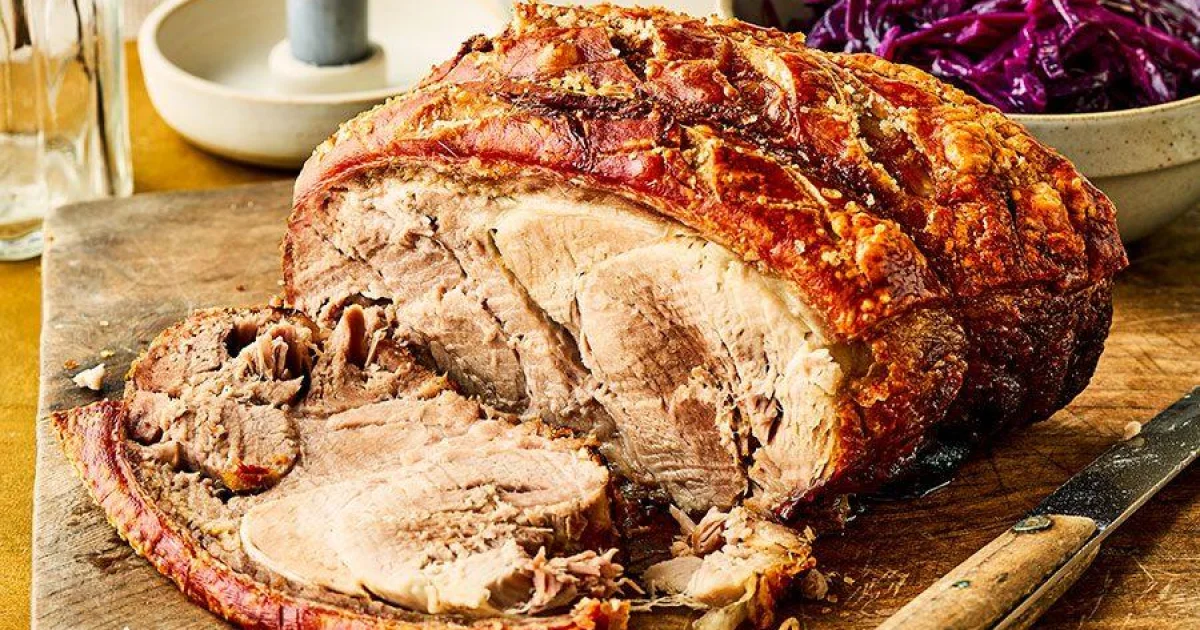
Crispy Roast Pork Shoulder with Perfect Crackling
Master the art of slow-roasted pork shoulder with this foolproof recipe that guarantees juicy, tender meat and irresistibly crispy crackling. This simple method uses a high-heat blast followed by a low-and-slow roast to create the ultimate centerpiece for your Sunday dinner.
Servings6 Portions
Prep Time20 Mins
Cook Time210 Mins
Difficulty
Intermediate
Ingredients
6
- pork shoulder joint2 kg
- large onion, sliced1
- Vegetable oil1 tbsp
- fine sea salt0.5 tsp
Step-by-Step Instructions
01
Preheat your oven to 240°C/220°C fan/gas 9. Prepare the pork by removing all packaging and patting the skin thoroughly dry with kitchen paper; moisture is the enemy of good crackling. Using a sharp knife, score deep diamond-shaped cuts into the skin and fat, being careful not to cut into the meat. Rub the vegetable oil all over the skin and into the scores, then generously sprinkle with sea salt, ensuring the salt penetrates the cuts.
02
Arrange the sliced onions across the base of a large roasting tin to act as a natural trivet. Place the pork joint on top of the onions. Roast in the center of the oven for 20–30 minutes, or until the skin begins to blister and bubble significantly. While the pork is roasting, boil a kettle of water.
03
Carefully pour enough boiling water into the roasting tin to cover the base, taking care not to splash any water onto the pork skin. Immediately reduce the oven temperature to 180°C/160°C fan/gas 4. Roast for a further 2.5 to 3 hours. The pork shoulder is a fatty cut, so this long, slow cook ensures the meat becomes incredibly tender without drying out.
04
For the final crisping, increase the oven temperature back to 220°C/200°C fan/gas 7 and roast for another 20–25 minutes. The crackling should be hard and sound brittle when tapped with a knife. Remove from the oven and let the meat rest in the tin for 20 minutes, loosely covered with foil. To serve, remove the crackling in large sheets, break into pieces, and carve the succulent meat underneath.